


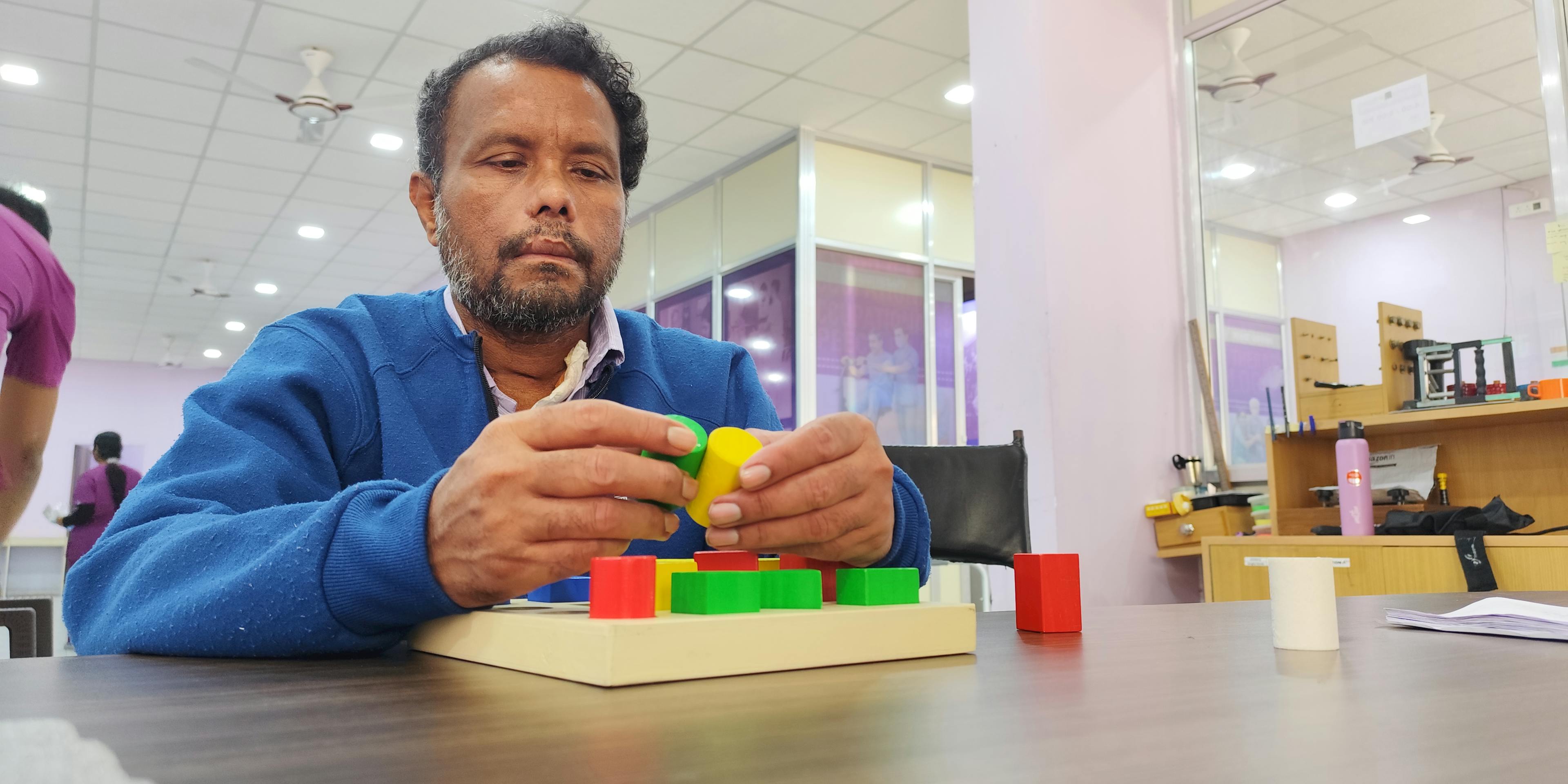
Occupational Therapy for Traumatic Brain Injuries Helps Recovery
Occupational Therapy for Traumatic Brain Injuries Helps Recovery. Discover how occupational therapy helps traumatic brain injury recovery.
Read MoreRecovering from a brain injury can feel overwhelming but with the right treatment, independence and quality of life can be restored. At Rehabana, our doctor-led team combines advanced technology with personalized rehab plans to support every step of recovery.
Specialized TBI Rehabilitation Programs
Cognitive, Physical & Behavioral Recovery Support
Advanced Neuro Therapy & Task-Specific Training
Personalized Care Plans for Long-Term Brain Recovery

Comprehensive, Doctor-Led TBI Rehabilitation
Recovering from traumatic brain injuries (TBI) can feel overwhelming, both for patients and families. A sudden head trauma whether from an accident, fall, sports injury, or surgery can change life instantly. At Rehabana, East India’s first dedicated neuro rehabilitation center, we provide holistic, doctor-led treatment of traumatic brain injury designed to restore independence, dignity, and quality of life.
Recovering from traumatic brain injuries (TBI) can feel overwhelming, both for patients and families. A sudden head trauma whether from an accident, fall, sports injury, or surgery can change life instantly. At Rehabana, East India’s first dedicated neuro rehabilitation center, we provide holistic, doctor-led treatment of traumatic brain injury designed to restore independence, dignity, and quality of life.
Understanding Traumatic Brain Injury (TBI)
A traumatic brain injury happens when a sudden injury to the head disrupts normal brain function. This can be due to a closed head injury (something hits your head hard but doesn’t break the skull) or a penetrating head injury (an object enters your brain).
TBI may cause temporary issues, or it can lead to long-term challenges such as brain swelling, damage to the brain tissue, or even brain death in the most severe cases.
Common head injury causes include:
The impact of a TBI depends on injury severity and the area of the brain affected. Doctors typically classify brain injuries into three categories:
Also called a concussion, mild TBI may cause headaches, dizziness, memory lapses, or confusion. Most patients recover well, but some may still need structured therapy for complete recovery.
Also called a concussion, mild TBI may cause headaches, dizziness, memory lapses, or confusion. Most patients recover well, but some may still need structured therapy for complete recovery.
The primary injury occurs at the time of trauma. Secondary injuries may develop later, such as brain bleeding or reduced oxygen supply, increasing the risk of complications and disability.
Why Families Trust Rehabana
Hear directly from patients and families who have experienced meaningful recovery at Rehabana. Their stories reflect our commitment to personalized care, consistent progress, and compassionate support throughout the rehabilitation journey.
Your Recovery Starts With the Right Care
Our treatments follow evidence-based protocols delivered by certified rehabilitation professionals.
Specialized care for stroke, paralysis, spinal injuries, and chronic pain recovery.
Continuous care and emergency assistance whenever you need us.
Common Symptoms of Traumatic Brain Injury (TBI)
Every patient with a traumatic brain injury (TBI) is different, but symptoms can vary depending on the severity and area of the brain affected. Early recognition and proper treatment are important, as untreated TBI can worsen over time and may require structured rehabilitation for safe, long-term recovery. Common TBI symptoms include:
At Rehabana, diagnosis begins with compassion and clarity. Families often feel anxious, so our doctors take time to explain every step.

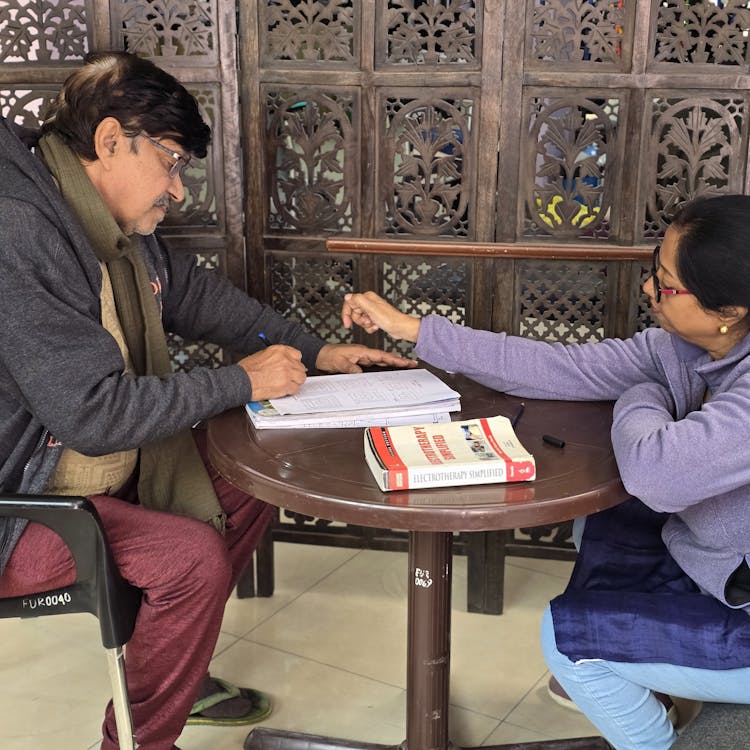
We start with a neurological exam to test reflexes, balance, and speech. Families also share details of the injury causes and patient’s medical history.
CT scans or MRIs reveal damage to the brain tissue, swelling of the brain, or a closed head injury. In some cases, doctors detect a diffuse injury or penetrating head injury.
Using the Glasgow Coma Scale, doctors classify cases as mild TBI, moderate TBI, or severe traumatic brain injury.
Memory, problem-solving, and emotional health are evaluated to guide therapy.

How Brain Injury Impacts Function and Behavior
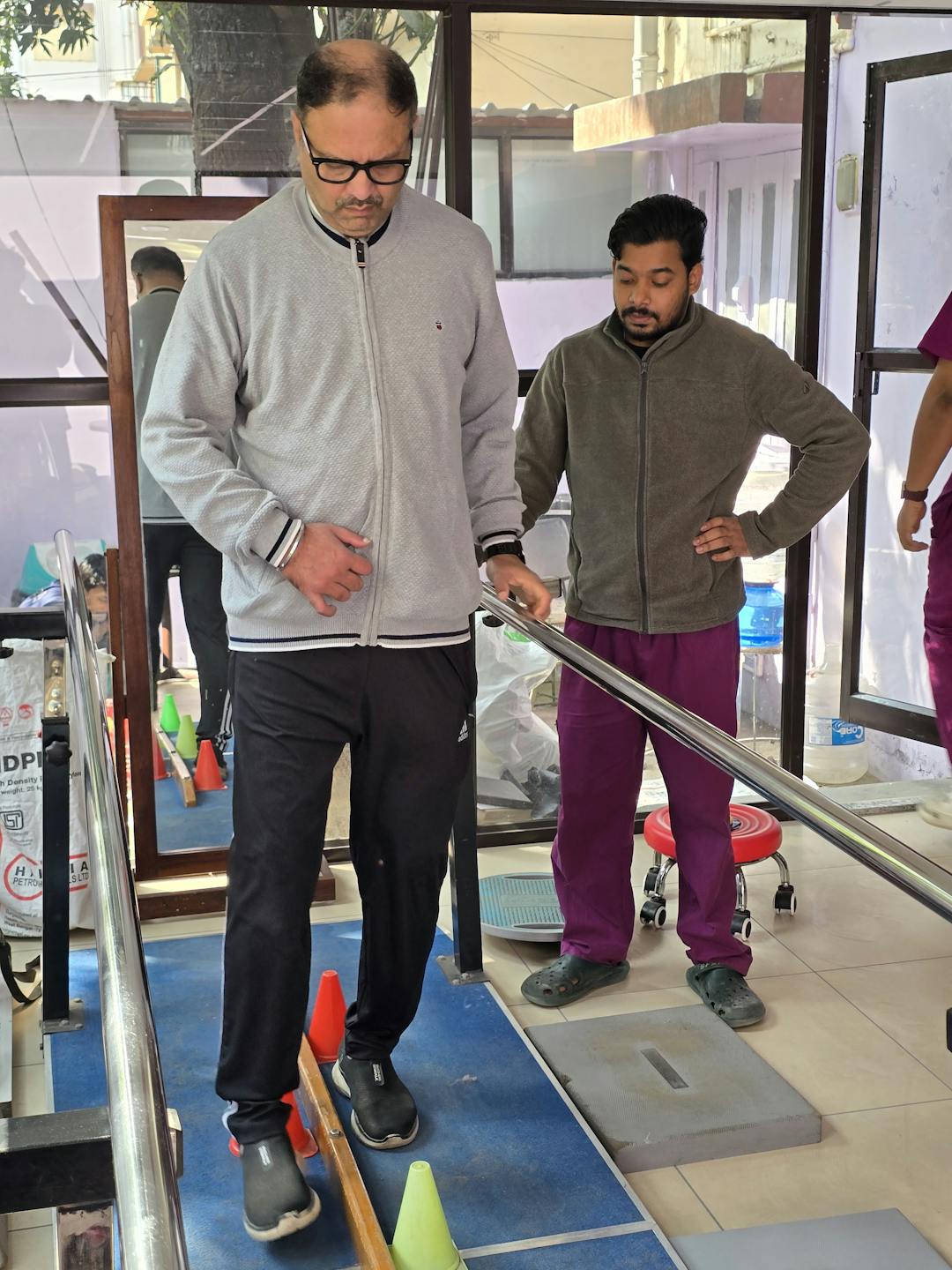
The brain is delicate, and even a mild traumatic brain injury (TBI) can disrupt normal function. Severe injuries may damage brain cells, brain tissue, or blood flow, leading to physical, cognitive, emotional, and long-term complications. The effects often depend on which area of the brain is affected, which is why treatment must be personalized for each patient.
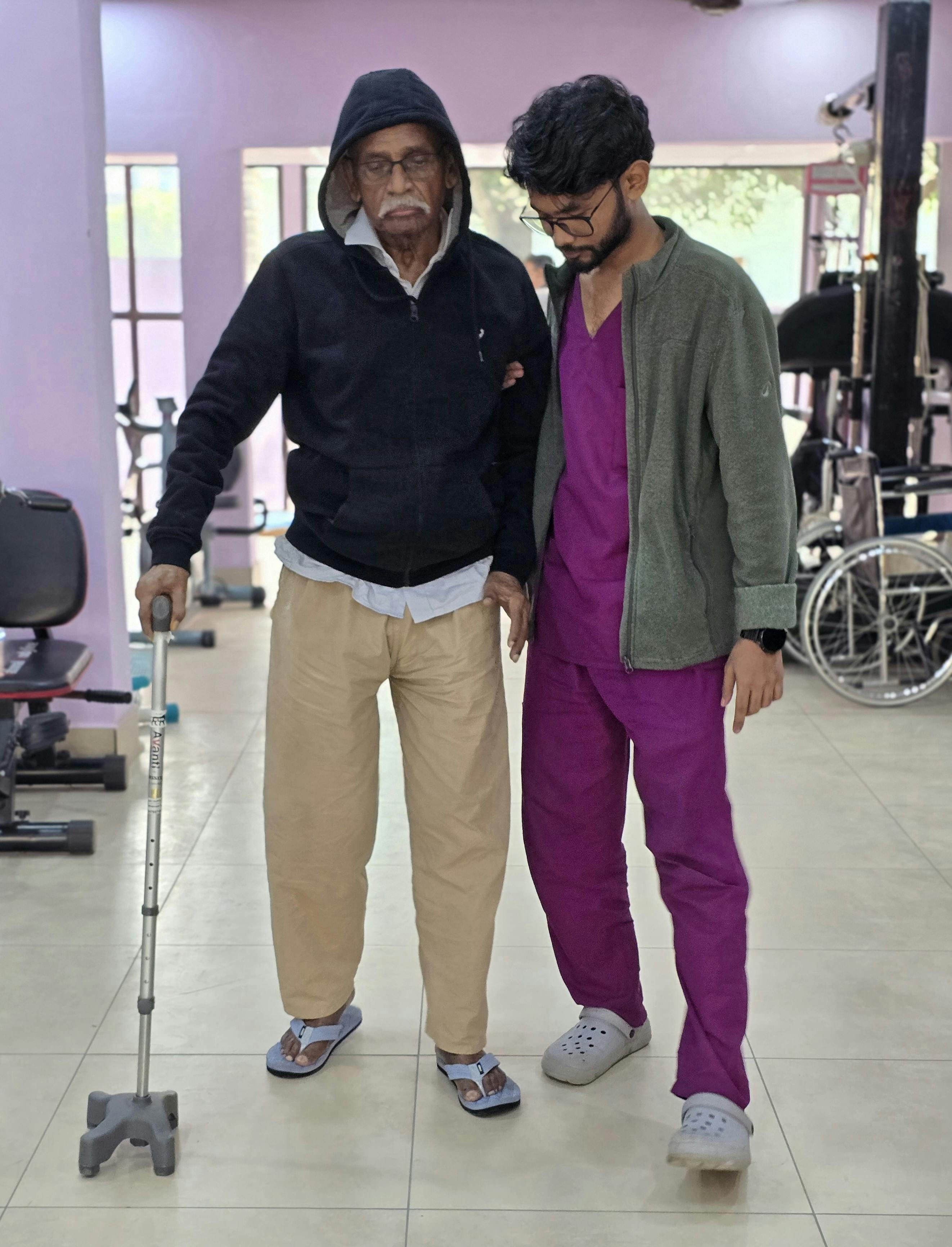
Medical care saves lives immediately after a traumatic brain injury, but many patients and families are left asking, “What next?” Without structured rehabilitation, recovery may remain incomplete and lead to long-term dependence. With proper therapy and guided management, the brain can relearn skills and patients can regain independence. At Rehabana, we support families with step-by-step, doctor-guided TBI treatment that is practical, structured, and hopeful.
Comprehensive, Doctor-Guided Rehabilitation for Lasting Recovery
Rehabana offers structured, doctor-led neurorehabilitation designed to help patients regain independence, improve function, and rebuild confidence after traumatic brain injury.
Every patient starts with a consultation with our MD Physical Medicine & Rehabilitation specialist, with goals reviewed every two weeks.
We use robotics, gait trainers, and modern therapy equipment to enhance recovery and improve outcomes beyond traditional physiotherapy methods.
Recovery is not just physical. We support emotional and mental well-being, treating the whole person, not just the injury.
We provide specialized rehabilitation that is cost-effective and clearly structured, without the high inpatient costs often seen in large hospitals.
Our team includes physiotherapists, occupational therapists, speech therapists, psychologists, and rehab nurses working together for comprehensive care.
We guide families at every step, offering practical advice and structured plans to continue progress at home.
From Setback to Strength
Behind every testimonial is a family that refused to give up. At Rehabana, patients don’t just receive therapy - they regain hope, confidence, and the courage to move forward.



Therapies for TBI Patients
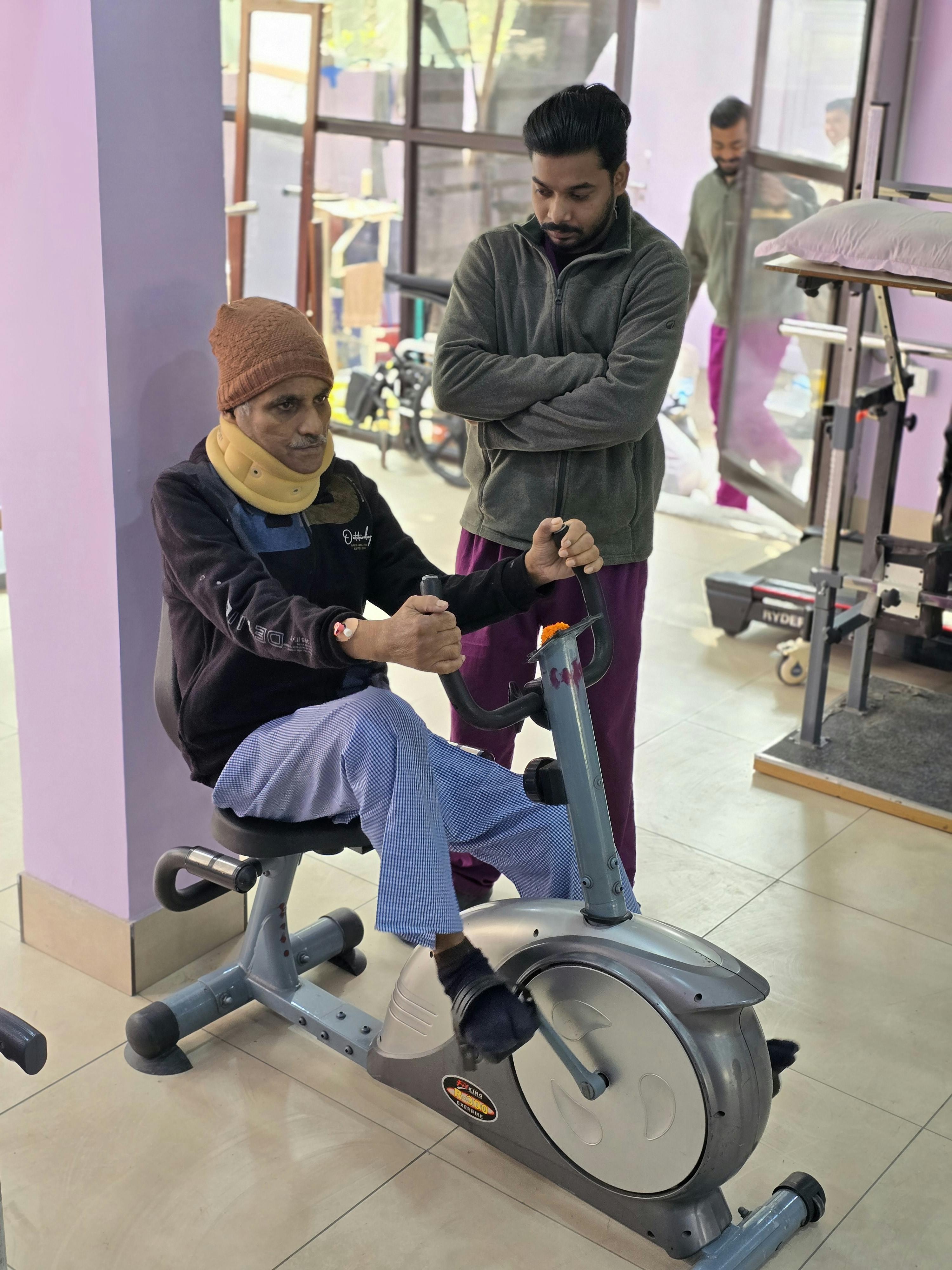
Rehabilitation is the heart of recovery. After the initial injury is treated in a hospital, patients come to Rehabana for structured rehab.

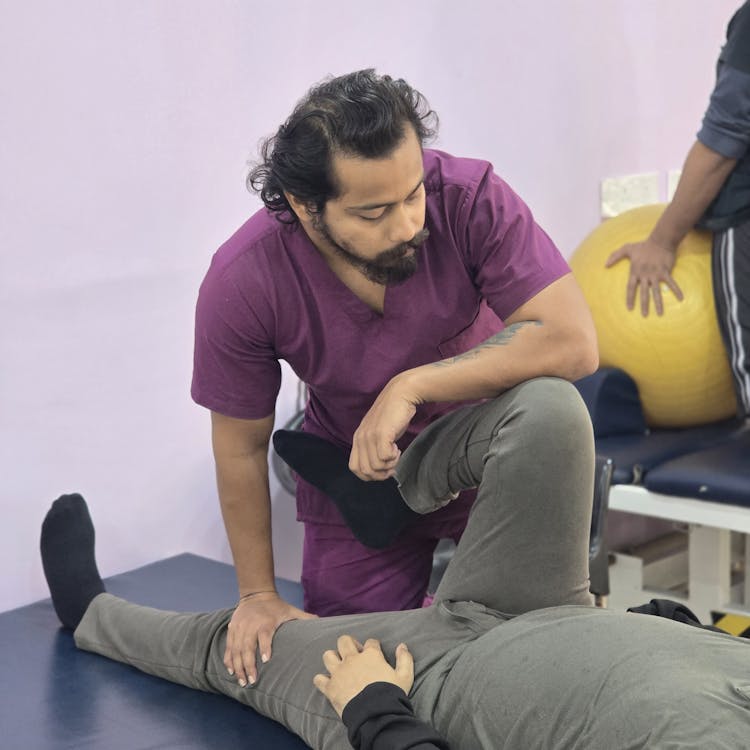
Helps restore strength, mobility, and coordination for traumatic brain injury patients.

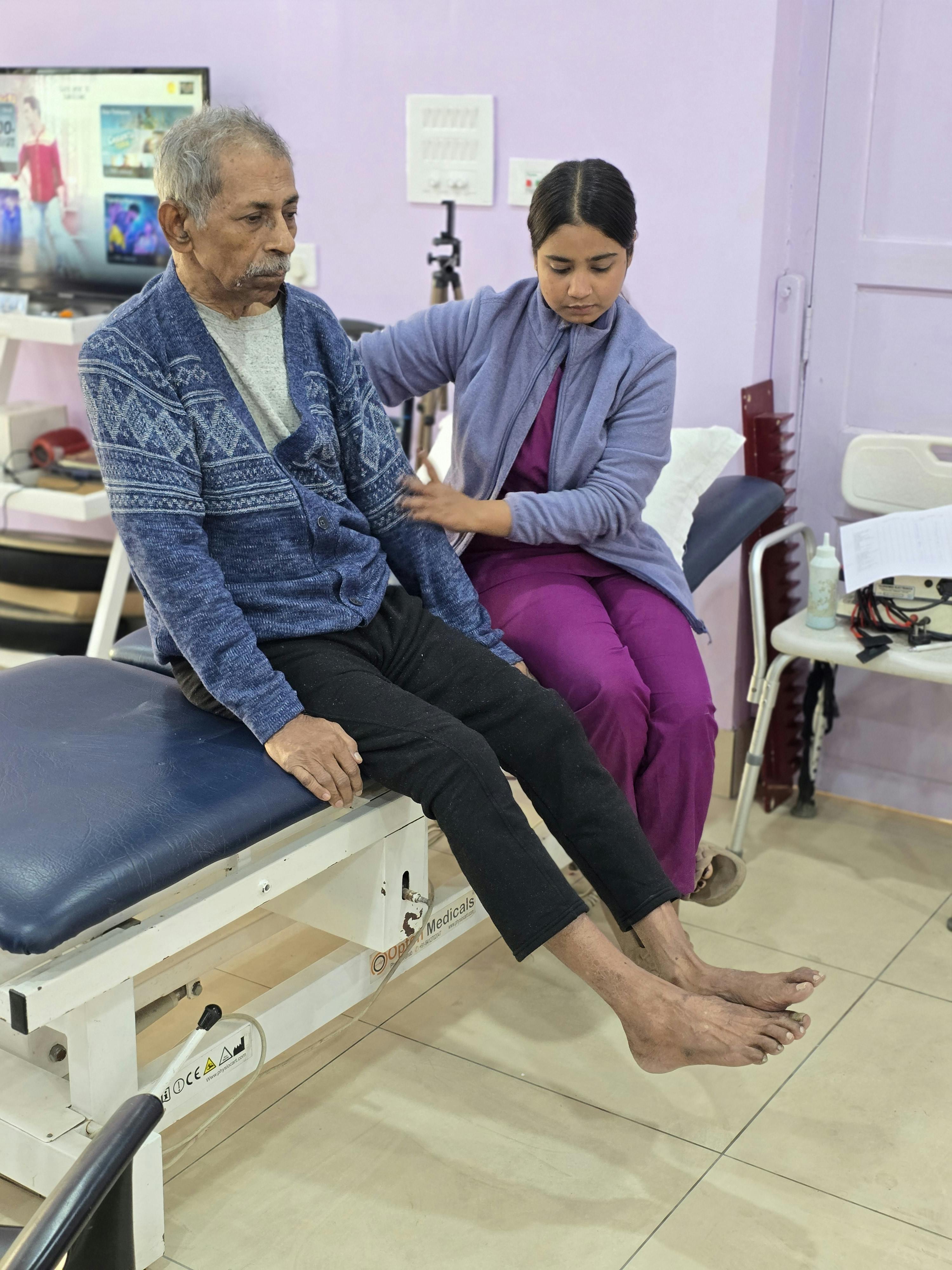
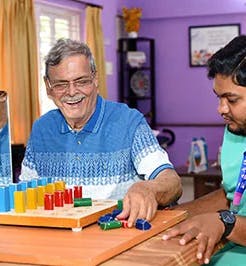
Trains patients to manage everyday tasks - eating, dressing, writing - to regain independence.

Restores communication, swallowing, and cognitive-linguistic skills for people with TBI.
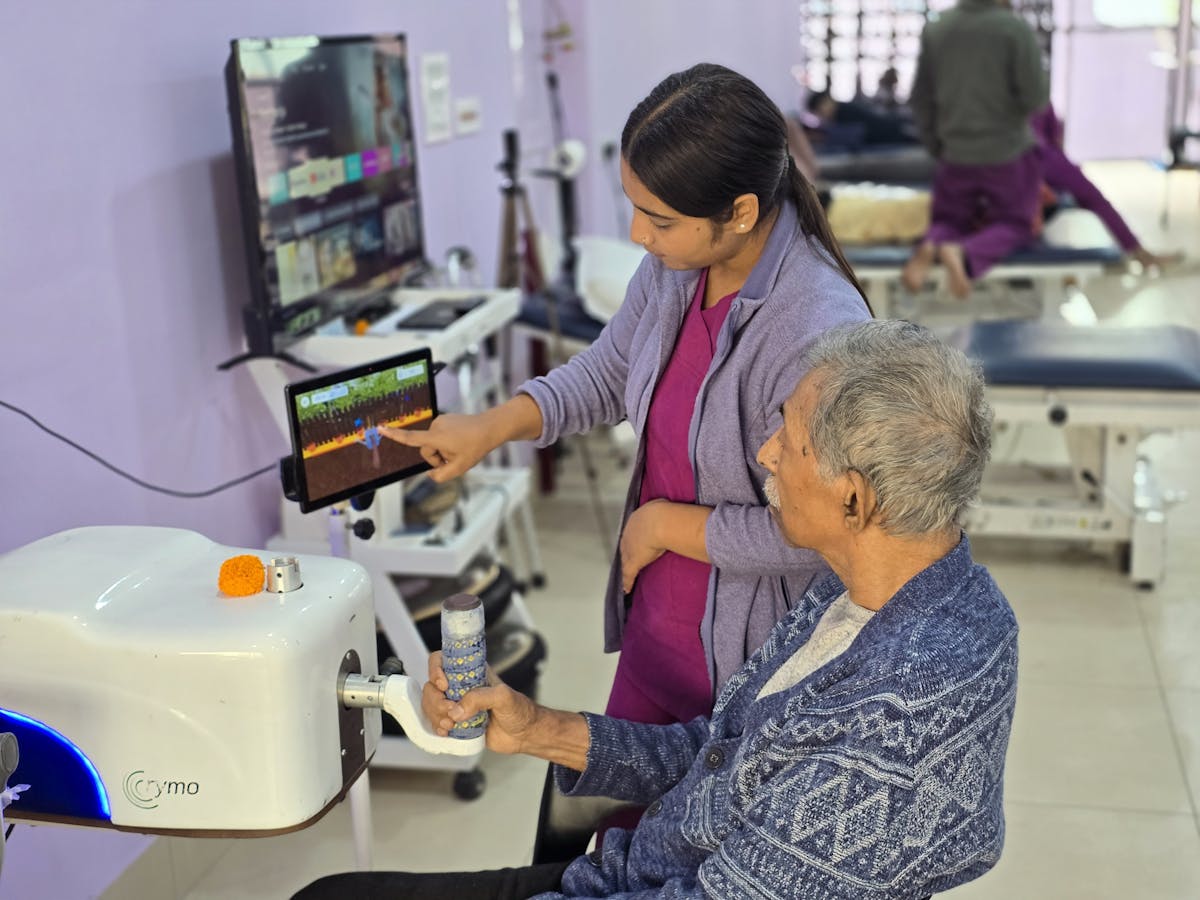
Improves attention, memory, and problem-solving for people with traumatic brain injury.
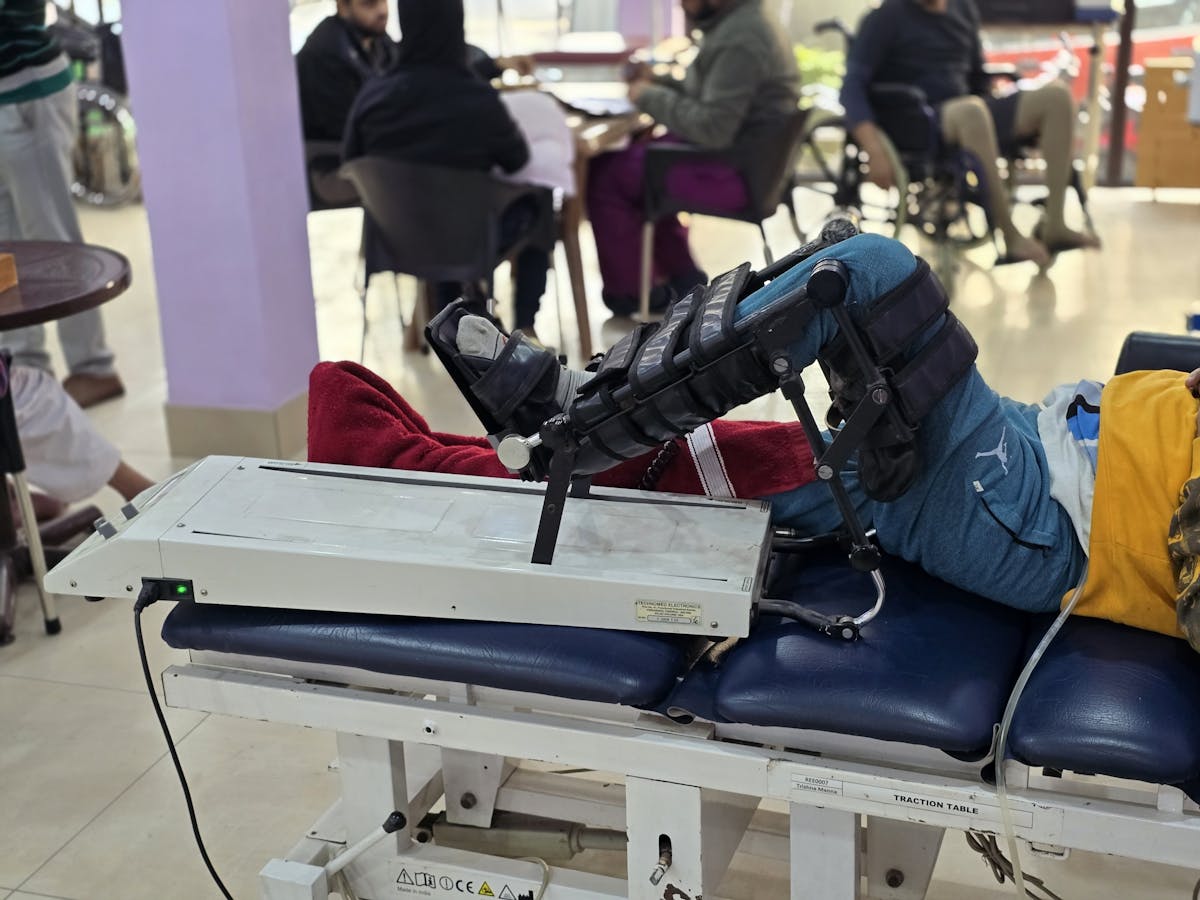
Uses machines to support walking and limb movement, especially useful in severe injury cases.

Supports mental wellbeing for patients and families. Family about the injury is also counseled so they can manage challenges together.

Advanced Medical Management for Severe Traumatic Brain Injury
For patients with severe traumatic brain injury (TBI), care goes far beyond routine therapy. It requires close medical monitoring, prevention of complications, and structured management based on global standards such as Brain Trauma Foundation recommendations - while keeping the process clear and transparent for families.
Understanding Recovery After Traumatic Brain Injury
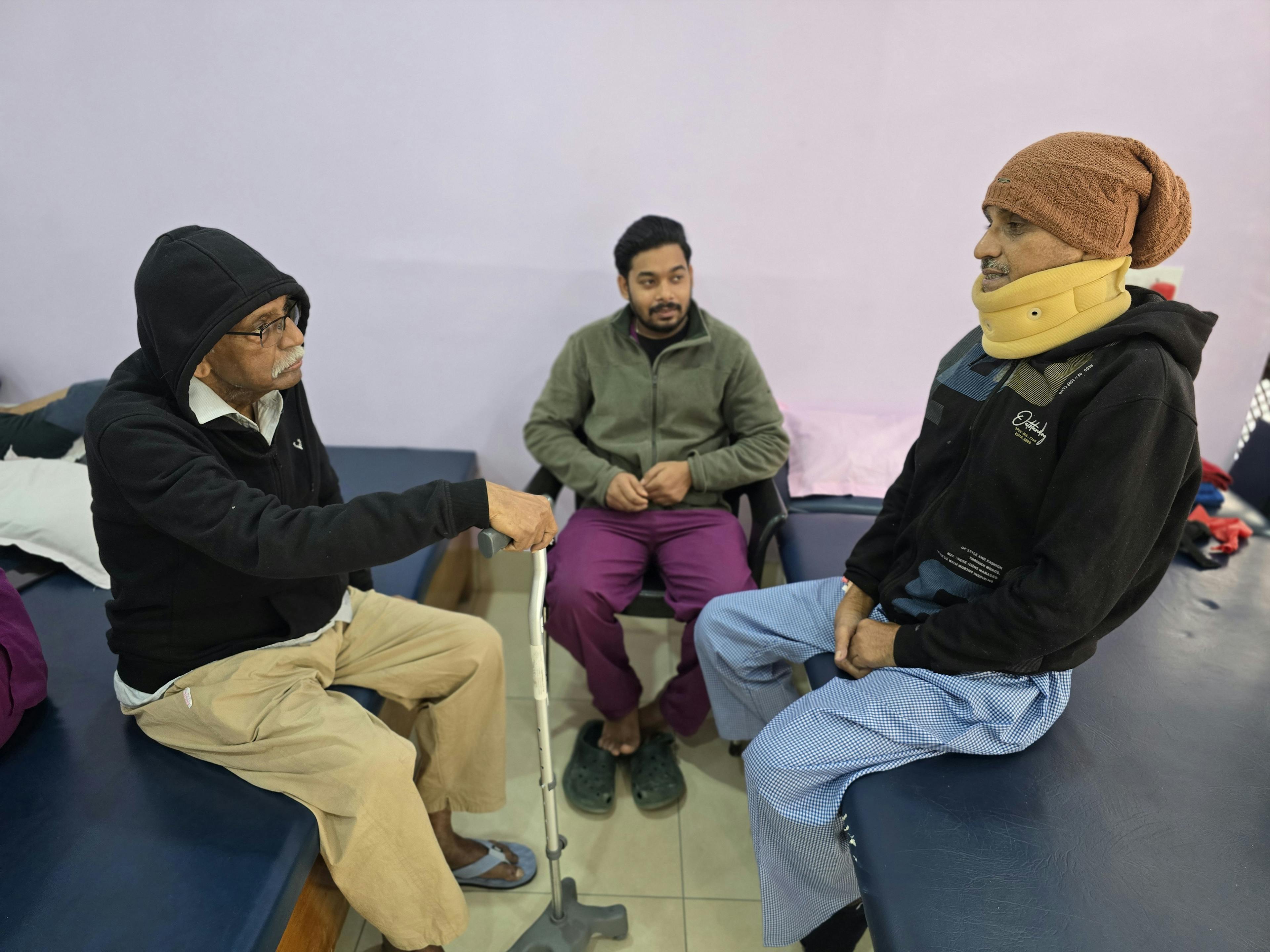
Recovery after a traumatic brain injury (TBI) depends on several factors, including the type of initial injury, age, overall health, and severity. While outcomes vary, structured rehabilitation plays a crucial role in maximizing brain recovery and improving independence at every stage. At Rehabana, we have seen meaningful progress even in patients who had lost hope, as personalized rehab plans help address the specific needs of mild, moderate, and severe injuries.

Why Families Trust Rehabana for Neuro Rehabilitation
Patient Stories

Patient's Daughter
My father has been unable to walk due to serious nerve problems, which has been very challenging for our family. We are truly grateful to Rehabana for providing home physiotherapy with such care and dedication. The doctor is extremely kind, listens patiently to our concerns, and guides us properly at every step. A special thanks to the Rehabana team, especially Arghadip Sarkar, whose support and effort have helped my father a lot in his recovery journey. We sincerely hope that with their continued guidance and therapy, my father will soon be able to walk independently without any support.

Patient
I'm suffering from back pain for last 1 yr. Today I visited Rehabana center and consulted Doc KBT & felling better after that.
Thanks to the whole Rehabana team.

Patient
Excellent care from doctors, therapist & all staff.
Thank you Dr Ambar Konar & also thank you Rehabana.

Patient
I got everything is nice about the Doctor & staff. This clinic is very encouraging for the patient.

Patient
Dr. Kaustav Basu Thakur use your Patient GFC kit For Patient pain, relief and recovery.

Patient
Dr. Koustav Basu Thakur & Dr. Ambar Konar best doctor...
I am suffering from spinal cord injury and under them treatment I am fine. They are just too good..
Thank you doctor and also thanks to all the staff.. They are very helpful.

Patient
Me and my are visiting continuously to meet Dr Kaustuv Basu Thakur. Here arrangement and behaviour are excellent. They accept credit card also. Helps in getting other supports

Patient
Rehabana Neuro Rehab Center is a great rehabilitation center situated in Salt lake. The doctors and all the staff are really good. Everyone here is dedicated to their work, are polite and attentive. The place is maintained well.

Patient
Rehabana is a very good institution of spinal injury & neuro-surgery.The best centre for stroke and other neurological disability rehabilitation. Very good medical team of expert rehab physicians, caring therapists, happiness managers and excellent treatment- a real blessing to stroke patients of eastern India. Treatment is outstanding.The staffs are helpful and friendly. Attitude of staffs are appreciable. Excellent service from the staffs, nurses and every therapist. The patient is properly informed about his health and care. Doctors are very friendly. Must say about Dr. Kaustav Basu Thakur, he is really a good doctor with nice behaviour & beutiful diagnoses. I insist everyone, who have such problems, must visit Rehabana.

Patient's Brother
As brother of patient Q Jesmin Sultana, I am very happy with the service of Rehabana.
She is a stroke surviver,
The journey from stretcher to Independent walking is very smooth,
Great support from Doctor to every stuff of Rehabana.
If anyone looking for a neuro physical rehab, Rehabana is best choice.
Best facility with robotic rehab
For speech psychology as well.
Thank you Rehabana.

Patient
Rehabana is a very good institution of spinal injury & neuro-surgery. One of the best centre for stroke and other neurological disability rehabilitation. Great medical office, beautiful people, team of expert rehab physicians, caring therapists, happiness managers and excellent treatment- a real blessing to stroke patients of eastern India. Everyone should visit who are having such type of requirement. Treatment is outstanding.The staffs are helpful and friendly. Attitude of staffs are appreciable. Excellent service from the staffs, nurses and every therapist. The patient is properly informed about his health and care. Doctors are very friendly. A vibrant place, energetic individuals that impart energy to regain hope, and bring back life to fullest potential. Most remarkable is their intensive rehab program of three hours daily with rest periods and dedicated beds for patients to relax in between therapy sessions.
Wheelchair access. A fantastic cafeteria for patients on the waiting hall. Wonderful and warm experience from start and finish.

Patient
Hello,
I have been suffering from arthritis for the past few months. I visited 2-3 doctors, but they did not understand my problem properly. Then I visited Rehabana. Dr. Kaustav Basu Thakur was really very helpful. He understood my problem and his medicine was very effective. Thank you Rehabana 😊 and also Thank you Kaustav Sir.

Patient's Wife
Hi I am wife of a stroke patient,
Consult in rehabana for his problem.
Rehab here for 1 month,
Now he is very stable, walking indipendently.
Doctor and every stuff here very helpful,
Good environment for treatment.
Thank you for all.

Patient's Daughter & Wife
My mother and my husband are patients of Dr. Kaustav Basu Thakur at Rehabana centre, Salt Lake. They've benefitted immensely from his treatment. Dr. Kaustav doesn't give unnecessary tests and examines each patient with utmost attention, care and time. He is very attentive and approachable. My mother's shoulder pain was rendering her almost incapable of leading her daily life even after consulting many doctors, until Dr. Kaustav actually cured her. My husband also has had tremendous improvement in his backpain after having to sit for long hours in the computer. Thanks to the very equipped clinic and very professional and warm staff and doctors.

Patient's Daughter
My mother was suffering with severe pain and movement difficulties since last 3 years …. And I got to know about Rehabana last year and Dr. Kaustav Basu Thakur made our life easy with his potentiality. Rehabana is like a complete arrangement for the patients with definite difficulties.

Patient
Every Member of Rehabana is Dedicated for their work.
Doctors are too Good and Dedicated.
They give reviews in every 10 days.
I am happy for their services.

Patient
I had a fantastic experience at Rehabna under Dr. Kaustabv Basu Thakur's supervision for the treatment of my De Quervain tenosynovitis on my left wrist. Dr. Thakur's expertise and care made all the difference. His ultrasound-guided steroid injection was precise and effective, providing me with much-needed relief. I highly recommend Dr. Thakur for anyone seeking top-notch treatment and compassionate care.

Patient
Rehabana has been a wonderful institution to us serving patients for Neuro-Rehabilitation services. They treat every patient as their own family member with extended support and great collaboration. We are blessed to receive services from Rehabana team and would highly recommend everyone to subscribe to their Neuro-Rehab services.

Patient
Am suffering from cvr back pain from last 15 years, atleast I found Dr kaustav basu thakur and his team, thank you rehababa, and stuff and management very good thank you Sai, & raj .. we are very very happy

Patient
Very good therapy centre. Well trained stuff and very helpful management. For stroke it is the Best rehab you can get. No institution like this is available in Kolkata or outskirts. Although i had a very good experience for one of my family member here.

Patient's Husband
I have consulted Dr. Ambar Konar for my wife regarding her long standing (~ 12 yrs) shoulder pain.He was exemplary in his diagnosis about Myofascial Band which has been missed by many stalwart Ortho or Neuro consultants since last 12 yrs. She is much better right now after the treatment. Not only his treatment but his behaviour is also very very cordial.He listens his patients with utmost care and provides the proper management. As all the latest equipments present along with Dr. Ambar Konar, Rehabana is highly recommended.

Patient
My experience with Rehabana is awesome. Was suffering from Slip disc pain and was unable to walk properly. Thanks to Dr. Kaustav Basu Thakur and team Rehabana thatI am fully cured and leading a normal healthy life now.
Keep on the good work.

Patient
I have been visiting Rehabana for myself as well as my mom. Dr Kaustav Basu Thakur has provided extremely effective advise and the quick results speak for themselves. Overall it’s a comprehensive centre with great doctors, highly adept and knowledgeable therapists, caregivers and admin staff. I will strongly recommend and refer others to visit Rehabana for all sorts of neuro rehab and trauma treatment.

Patient
Doctor Ambar and Doctor Kaustav Basu are excellent!
The Crew is Amazing! Just like family! Each One them are just wonderful! A True 5 Star for them! Love u guys

Patient
Excellent infrastructure for neuro-rahibilitation and musculoskeletal physiotherapy. Staffs are well behaved. Dr.Ambar Konar is a very friendly doctor with excellent professional and clinical knowledge. His advices have benifitted our family multiple times.

Patient
Team rehabana were very helpful and played a crucial role on my recovery journey. Nabanita di and Sangeeta di are both very polite and helpful individuals. Dr Basu Thakur and his team are all professional and helpful people.

Patient
I consulted Dr Kaustav for my knee pain & back pin after 10 days medicine i felt am in right hand.He explained me well the reason behind and what more to do . Thanks to rehabana

Patient
I am satisfied with the treatment of Dr. Ambar Konar. I'm under his treatment for last two years for knee ailments. I'm fine now. Thank you doctor Konar

Patient
Finest rehab center in kolkata. From the ambiance to treatment ypu you always get a positive vibe from here. Very caring and helpful staff. A one-stop solution if you want any rehabilitation related service.

Patient
Wonderful experience with Rehabana care. The staffs was helpful, friendly and ensure I am properly informed about my health and care. I am so glad I chose Rehabana care and would highly recommend to anyone.

Patient
Treatment is outstanding. Unexpected result got by their treatment. Attitude of documents and all staffs are really appreciable. Everyone should visit who are having such type of requirement.

Patient
I am giving five star rating as it is led by two physical medicine and rehab medicine doctors,not by some physiotherapist,as its high time people should enquire about whether any facility is led by MD doctors who are trained in physical medicine and rehabilitation medicine.As a doctor i would suggest my family member to visit this facility.I saw the banner outside city centre saltlake and searched about wherabout.All the best to you Dr Konar and Dr Basu.

Patient's Nephew
My uncle had severe bike accident last month and got neuro injury. Just 14 days and my uncle is able to walk on his own. Thanks Rehabana.

Patient
Doctor Ambar Konar, good and, REHABAND center all are best service for me, I'm safaring knee pain, now better then last 7 months.

Patient's Son
My mother was admitted for 15days . All the staffs were very polite and good. Overall good experience. Thank You for your services

Patient
Very good service of Rehabana.
And Treatment of Dr A Konar is Really good and help me a lot.
Recommended.

Patient
Words are less for appreciation... such a wonderful staff and facilities..... What to say about Doctor... who did miracle.... would say a best of best .. thank you so much rehabana team ....

Patient
Excellent first of its kind infrastructure in Kolkata. Very impressed with their facilities, excellent staff and treatment quality. Highly recommended!

Patient
Doctors are very good .. well behaved 🙂 very mh happy with the rehab services. Front office Dex is also very cooperative.. 100% recommend REHABANA.

Patient
Excellent neuro rehab centre in East India. Dr. Konar is excellent & outstanding in treatment & diagnosis.

Patient
Dr.Ambar Konar is the best rehabilitation physician in west bengal. Thank you sir

Patient
Wonderful experience with Rehabana care. The staffs was helpful, I am so glad I chose Rehabana care and would highly recommend to anyone.❤️❤️
Talk to a Neuro Rehab Specialist
At Rehabana, our goal is not just survival, but living a productive life after traumatic brain injuries. Book an Assessment Today with our doctor-led neuro rehab team and begin the journey to recovery.
FAQs
It depends on the injury severity. Mild traumatic brain injuries may improve in weeks, but moderate and severe TBI often need months of therapy.
Knowledge That Guides Recovery
Get expert neuro rehabilitation tips from the doctors at Rehabana, Kolkata — simple guidance on stroke recovery, spinal cord injury rehab, Parkinson’s care, and enhancing quality of life after neurological conditions.
Occupational Therapy for Traumatic Brain Injuries Helps Recovery. Discover how occupational therapy helps traumatic brain injury recovery.
Read More
How Speech Therapy Helps Patients with Parkinson’s Disease: Learn how speech therapy can help with slur, speech and swallowing difficulties.
Read More
Speech therapy and language therapy improve communication skills. Speech-language pathologists can help with speech and language, and swallowing.
Read More