Occupational Therapy for Traumatic Brain Injuries Helps Recovery
Occupational Therapy for Traumatic Brain Injuries Helps Recovery. Discover how occupational therapy helps traumatic brain injury recovery.
Read More
Around 10%–15% of stroke survivors can recover almost fully, and 25% recover with mild impairments. As the nature of stroke and the patient’s status are different in each case, the extent of recovery is highly variable. However, comprehensive rehabilitation has been proven to maximize the chances of complete recovery.
Certain factors influencing stroke recovery have been identified. These include:
Younger patients having mild stroke without much complications or gross physical, cognitive, and psychological problems, managed by early optimal medical and rehabilitative interventions, have fair chance of complete recovery.
Though, with multi-disciplinary approach, technology assisted and evidence based therapy, patients with considerable disabilities are able to achieve highest level of functional recovery.
Know more: Stroke Rehab in Kolkata: First 90 Days Recovery Guide
Timeline of stroke recovery is variable. Neuroplasticity, a complex process of brain repair, heightens in the first 3 months post stroke. Hence, maximum recovery occurs and rehabilitation remains most effective during these 3 months. Then recovery slows down and maintains a plateau up to six months. Around 60% of stroke survivors are able to walk by then. After that, recovery continues at a slower pace for years and beyond. Hence, continuation of rehabilitation is crucial in regaining maximum capacity in the long term. Evidence of recovery even 12 to 18 months after stroke is available.
Loss of power and voluntary control, partially or fully, in the muscles of the affected side is common after stroke. Initially, muscles become flaccid. Then tone returns and starts increasing, so that extremities take a particular resting position or ‘synergy’. Later, tone reduces and normal functions are restored. However, considerable variation occurs in this classic process. While some patients recover completely, others are left with mild to marked weakness.
In recent times, along with traditional exercise therapy, modern techniques like neurodevelopmental retraining, motor learning, EMG biofeedback, constraint-induced movement therapy, virtual reality, and robotics have optimized the chance of recovery from post stroke paralysis.

Know more: Multidisciplinary Stroke Rehabilitation India: A New Hope
Stroke is a leading cause of seizures and epilepsy. Around 11.5% of patients with stroke are at risk of developing late-onset seizures within the next 5 years.
Seizures can occur early, with the peak incidence within 24 hours after stroke. One third of early seizure cases present with post-stroke epilepsy. Early seizures have a lower chance of recurrence. They occur due to lack of blood and oxygen supply in the brain, along with toxic and metabolic effects and over-excitation of brain tissue.
Late-onset seizures peak within 6 to 12 months after stroke and have a higher recurrence rate. Higher age and intracerebral hemorrhage (large bleeding in brain matter) are the most important risk factors for developing seizures.
Large blood vessel occlusion, which hampers blood supply to a wide area of the brain, damage to the cortex of the brain, and compromise of blood supply in certain brain arteries (Middle cerebral arteries) are associated with post-stroke epilepsy.
Seizures negatively affect recovery and rehabilitation outcomes. Therefore, timely intervention with anti-epileptic medication is required.
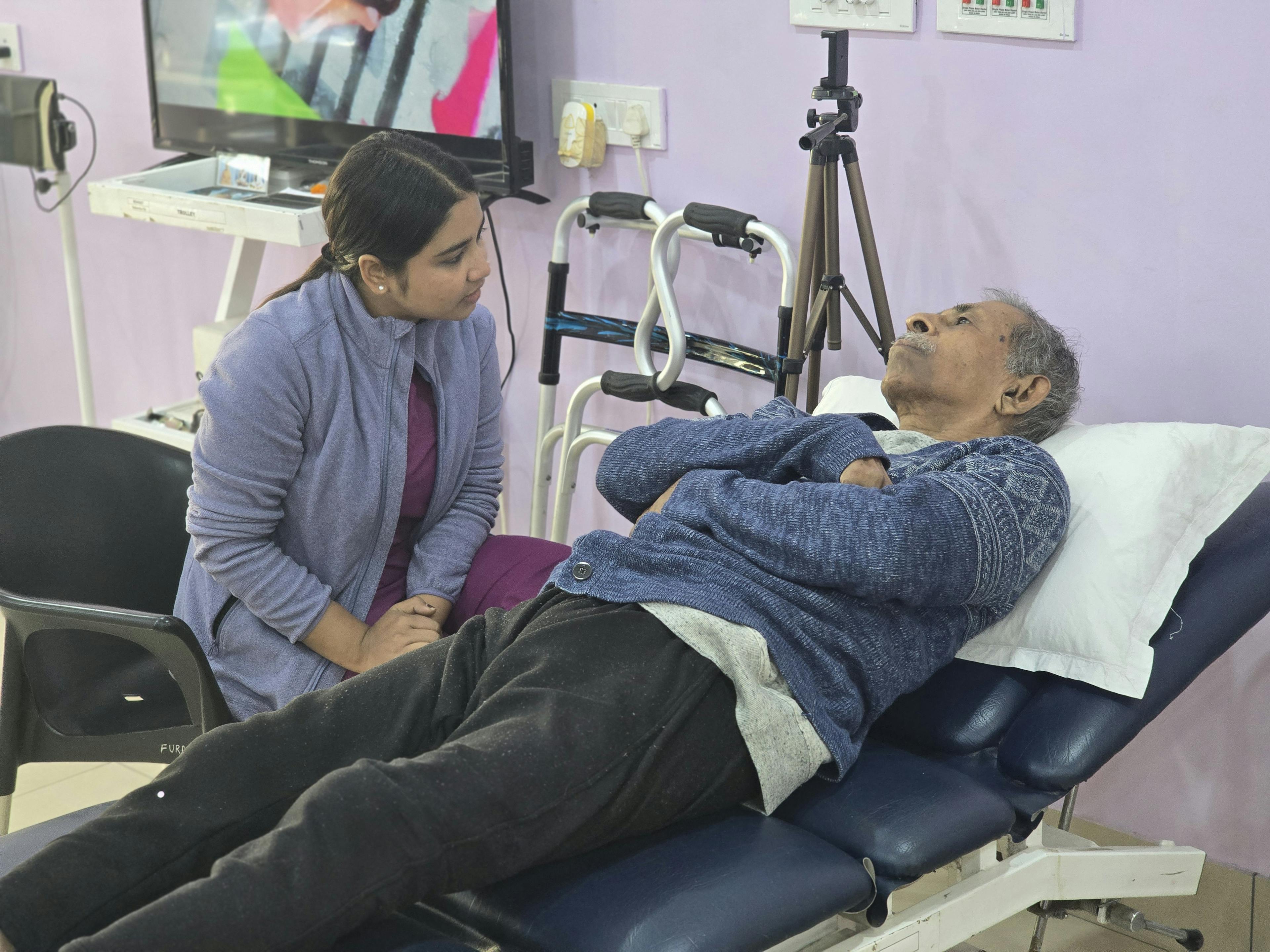
Stroke recovery varies from person to person, but early treatment and consistent rehabilitation greatly improve outcomes. With proper medical care and continued therapy, many survivors can regain significant function and independence over time.
Knowledge That Guides Recovery
Get expert neuro rehabilitation tips from the doctors at Rehabana, Kolkata — simple guidance on stroke recovery, spinal cord injury rehab, Parkinson’s care, and enhancing quality of life after neurological conditions.
Occupational Therapy for Traumatic Brain Injuries Helps Recovery. Discover how occupational therapy helps traumatic brain injury recovery.
Read More
How Speech Therapy Helps Patients with Parkinson’s Disease: Learn how speech therapy can help with slur, speech and swallowing difficulties.
Read More
Speech therapy and language therapy improve communication skills. Speech-language pathologists can help with speech and language, and swallowing.
Read More